
Investing in healthcare: Technology as the key to scalable impact
Supported by
Healthcare that is out of reach
Access to healthcare is an issue in many parts of Asia-Pacific. To begin with, medical facilities and professionals can be few and far between. In 13 countries in Asia-Pacific1 with available data, there are only 15 doctors per 10,000 people, while the world average is 192. Even when healthcare services are physically accessible, the costs are often high, occasionally so high that they lead to financial hardships.

In China, where extreme poverty has been virtually eradicated3, over 80 million people remain at the risk of being pushed below the extreme poverty line should they suffer an illness that requires surgical care4. Adding to this burden is the travel cost. For example, a patient who lives in a hard-to-reach area in Pakistan needs to spend US$ 30–70 on a trip to the doctor, while the government insurance scheme only pays US$ 35.
Such inaccessibility of healthcare services, both physical and financial, is mirrored by unsatisfactory progress towards achieving the Sustainable Development Goals (SDGs) of the United Nations (UN). Data reveals that only two of the 20 countries within the scope of Advancing impact: A roadmap for social investing in Asia6 are on track to achieve SDG3 by 20307.
The case for investing in technology to accelerate progress
Building additional healthcare capacity takes time. Interviews with multiple experts conducted by Economist Impact revealed that technology is a promising means for the more efficient utilisation of existing resources. For example, a digital appointment scheduling system can reduce waiting time, improve service quality, and reduce risk of cross-infection by helping high-volume healthcare facilities manage patient flow. In addition, technology can also make the distribution of existing healthcare resources more inclusive and equitable. For example, in telemedicine, information technology eliminates geographical boundaries and makes it easier for patients to reach doctors irrespective of where they live.

Furthermore, technology can also help countries get back on track to achieve the health SDG by 2030 by bringing in the investments that are required to fill the funding gap8. Technology has the potential to create scalable impact with commercially viable models, thereby making it an attractive option for many social investors who are aiming to maximise impact with potential financial return. As Joshua Agusta of Indonesia Impact Fund (IIF) explains, "our biggest thesis is to find solutions that can really be replicated at scale, and that means most of the solutions will need to come from the technology sector. These technologies can be scaled up in multiple regions".
Successful cases
Telemedicine: Is there a (virtual) doctor in the house?
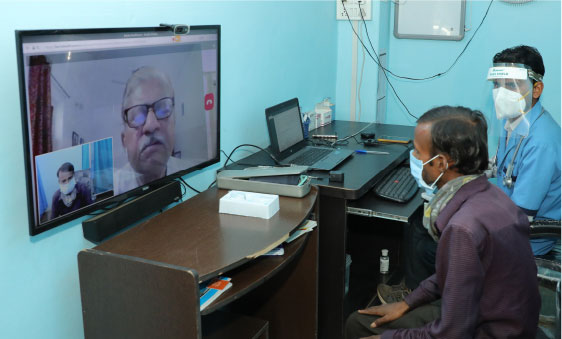
An example of technology enabling more equity in distribution of healthcare resources is Karma Healthcare, a telemedicine provider. Karma runs nurse-assisted ‘e-clinics’ in rural India. Each of Karma’s e-clinics is equipped with internet, a computer, and a webcam. When a patient arrives, a trained nurse performs essential examinations, discusses the patient’s symptoms with them, and facilitates a conversation between the patient and doctor over a video call. Patients then receive prescriptions and have them filled in Karma’s pharmacy.

One factor that sets Karma apart from competitors is its efforts to tailor services to local needs, thereby highlighting the localisation principle—that is, understand the local context during project design and implementation in order to achieve optimal impact—one of the key principles outlined in research by Economist Impact to maximise the impact of social investments.
The first obstacle that stands between patients in rural India and quality healthcare is the physical distance and high costs. Two-thirds of doctors in India are based in cities, while 70% of the population lives in rural areas9. Karma tackles this challenge by opening e-clinics in villages, saving patients from long, taxing trips to the doctor as well as associated expenses. In fact, a visit to a Karma e-clinic can be seven to eight times cheaper than a face-to-face session with a doctor10.
Two-thirds of doctors in India are based in cities, while
70% of the population
lives in rural areas.

The next challenge arises from the patients themselves. Rural patients are generally less well-equipped to navigate the healthcare system. This is where Karma’s nurse-assisted model comes into play. Instead of having the patients fumble with a smartphone and attempt to figure out how to set up online calls with doctors, Karma has a trained nurse in each of its e-clinics to take care of all the technical aspects. Additionally, the nurse is usually locally hired and speaks the dialect. This is reassuring for the patients and helpful for the doctors, as the nurse can ensure that the latter understand exactly what is wrong with the former.
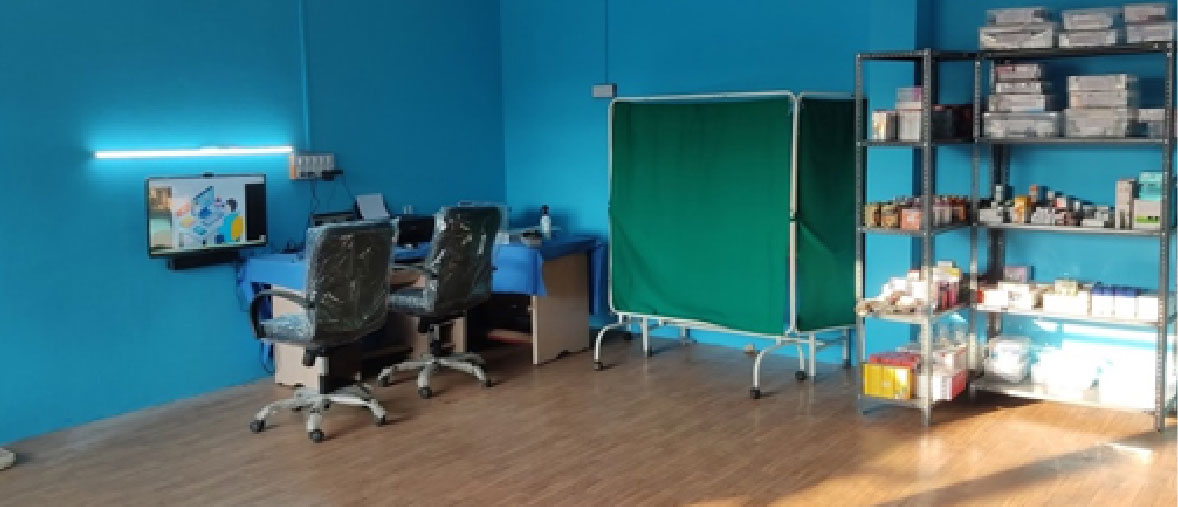
As its popularity grows, Karma now runs 30 e-clinics across India, each serving 25,000 patients11. Meanwhile, technology has begun to connect doctors with patients over a distance in other parts of Asia-Pacific as well. In China, where healthcare is predominately public, research shows that at least 16.5% of public hospital doctors now operate dual practices—interacting with patients directly over online platforms in addition to their day jobs. Over 365,000 doctors are active on the country’s four leading online health platforms, where patients can message, call, or video-call doctors12. The impact of China’s digital health industry has scaled up rapidly. One estimate reveals that the market has grown eightfold to US$5.7 billion in the period from 2015 to 201913.
Medical drones: Giving wings to life-saving medical supplies
In another case, the i-DRONE project—a collaboration between the Indian Council of Medical Research (ICMR) and DayBest, a drone company—is conquering healthcare inaccessibility in a different manner.
The project is a great illustration of the collaboration principle—that is, collaboration is the best means to achieve systems change that addresses the root cause of problems, which is a key principle outlined in research by Economist Impact to maximise the impact of social investments.
When the covid-19 pandemic hit, ICMR partnered with DayBest to repurpose their agricultural drones to deliver vaccines to India’s hard-to-reach populations. Although flying drones is subject to a multitude of regulations, in this unusual partnership between a government institution and a start-up, ICMR and DayBest managed to work together to combine the former’s medical expertise with the latter’s drone technology. In October 2021, the team sent 900 doses of covid-19 vaccines on a 31 km flight across Loktak Lake in Manipur. The vaccines reached the destination, the Karang Primary Health Centre on an island in the lake, within 15 minutes. The delivery would otherwise have taken over three hours14.
Following the successful inaugural flight, the i-DRONE project has expanded to additional areas and delivers not only vaccines but also other essential medical supplies that are often in short supply in numerous primary healthcare centres (PHCs). Thus far, the drones have reached 20 PHCs in Manipur alone and have delivered over 17,000 units of medical supplies. This successful rollout makes i-DRONE the first project of its kind in South Asia.
Devesh Zha, founder of DayBest, believes that as the industry grows, infrastructure improves, and standard operating procedures (SOPs) mature, drones can become a key component of the technological solution to the issue of access to healthcare in Asia-Pacific: "With telemedicine, doctors can now advise patients from far away and drones can deliver the medicine they prescribe, especially when there’s an emergency." Together, these technologies can save lives by bringing medical resources within patients’ reach.
Scale is key to managing the cost of this new delivery method. While drone delivery requires a certain upfront fixed cost, the operating cost is low. As delivery scales up, the cost of drones could come down as well, as it is cheaper to produce 10 drones at a time instead of one. Currently, the size of the demand has already allowed DayBest’s medical drones to be commercially viable. On a larger scale, deliveries by drone can become even cheaper than deliveries by road.
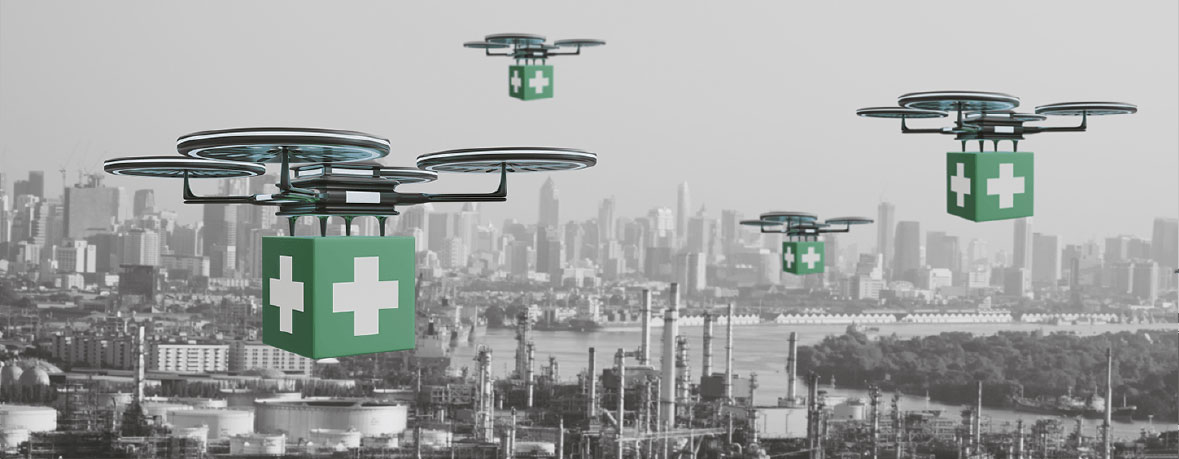
While medical drones remain a nascent business in Asia-Pacific, Africa offers a sneak peek into what such drones can achieve on a large scale. In 2016, the Government of Rwanda partnered with an American drone company, Zipline, to deliver blood products from two hubs to 20 healthcare facilities. Research shows that the agility of drone delivery has helped to reduce blood product expirations by 67%, 12 months into the project15. The programme has now been rolled out nationwide16.
What’s next?
The covid-19 pandemic has accelerated innovations in the healthcare sector. Both Karma and DayBest have witnessed rapid increases in the demand for their services during the pandemic. However, this is just the beginning. For example, as Jagdeep Gambhir, CEO of Karma Healthcare, envisions, the truly disruptive application of digital technology in healthcare would be a vertical integration of health systems. Healthcare facilities at various levels will be able to share data so that doctors can make referrals, learn what examinations have already been performed, and follow up with patients at ease.
The growing number of new applications of technology in healthcare calls for more research to ensure that every new experiment adds to collective knowledge. This highlights the research principle—that is, don’t reinvent the wheel but invest in research where there is no precedent, a key principle outlined in research by the Economist Impact to maximise the impact of social investments.
Apart from investing in technology, investors will also need to fund research, share knowledge, and break silos—in Mr Gambhir’s words, "that’s when magic happens".
- These countries are Australia, China, India, Indonesia, Japan, Malaysia, New Zealand, Pakistan, Singapore, South Korea, Sri Lanka, Thailand, and Vietnam.
- The Economist Intelligence Unit. (2022). Country Analysis Advanced [data set]. https://data.eiu.com/default.aspx
- World Bank data shows that as of 2019, only 0.1% of the Chinese population lives in extreme poverty. See https://data.worldbank.org/indicator/SI.POV.DDAY
- World Bank data shows that as of 2020, 6.1% of the Chinese population is at risk of impoverishing expenditure for surgical care. See: World Bank. (2022). World Development Indicators [data set]. https://databank.worldbank.org/reports.aspx?source=2&type=metadata&series=SH.SGR.IRSK.ZS
- Zaidi, S., Saligram, P., Ahmed, S., Sonderp, E., & Sheikh, K. (2017). Expanding access to healthcare in South Asia. BMJ, 2017(357), j1645. https://www.bmj.com/content/357/bmj.j1645
- These countries are Afghanistan, Australia, Bangladesh, Cambodia, China, India, Indonesia, Japan, Korea, Laos, Malaysia, Myanmar, Nepal, New Zealand, Pakistan, the Philippines, Singapore, Sri Lanka, Thailand, and Vietnam.
- The two countries are Australia and Japan. Sachs, J. D., Kroll, C., Lafortune, G., Fuller, G., & Woelm, F. (2021). Decade of Action for the Sustainable Development Goals: Sustainable Development Report 2021. Cambridge University Press. https://www.sdgindex.org/reports/sustainable-development-report-2021/
- US$371 billion per year for low- and middle-income countries. Stenberg, K., Hanssen, O., Edejer, T. T-T., Bertram, M., Brindley, C., Meshreky, A., Rosen, J. E., Stover, J., Verboom, P., Sanders, R., & Soucat, Agnes. (2017). Financing transformative health systems towards achievement of the health Sustainable Development Goals: A model for projected resource needs in 67 low-income and middle-income countries. Lancet Global Health, 5(9), e875-e887. https://doi.org/10.1016/S2214-109X(17)30263-2
- Karan, A., Negandhi, H., Nair, R., Sharma, A., Tiwari, R., & Zodpey, S. (2019). Size, composition, and distribution of human resource for health in India: New estimates using National Sample Survey and Registry data. BMJ Open, 2019(9), e025979. http://dx.doi.org/10.1136/bmjopen-2018-025979
- Interview with Jagdeep Gambhir, CEO of Karma Healthcare.
- ibid.
- Xu, D., Zhan, J., Cheng, T., Fu, H., & Yip, W. (2022). Understanding online dual practice of public hospital doctors in China: A mixed-methods study. Health Policy and Planning, 37(4), 440-451. https://doi.org/10.1093/heapol/czac017
- Fastdata. (2021). 2020 nian Zhongguo hulianwang yiliao hangye baogao [Report on China’s internet health industry 2020]. http://www.woshipm.com/it/4325458.html
- All information regarding the i-DRONE project and DayBest has been fact-checked by Devesh Zha, DayBest’s founder.
- Nisingizwe, M. P., Ndishimye, P., Swaibu, K., Nshimiyimana, L., Karame, P., Dushimiyimana, V., Musabyimana, J. P., Musanabaganwa, C., Nsanzimana, S., & Law, M. R. (2022). Effect of unmanned aerial vehicle (drone) delivery on blood product delivery time and wastage in Rwanda: A retrospective, cross-sectional study and time series analysis. Lancet Global Health, 10(4), e564-e569. https://doi.org/10.1016/S2214-109X(22)00048-1
- Zipline. (n.d.). Transform Health Access. https://flyzipline.com/global-healthcare/
Other articles


The climate challenge: Need and models of collaboration in the Asian context
Multifaceted problems arising from climate change are affecting Asia-Pacific disproportionately, and they require collaboration to solve. There are multiple pathways to do so.
Read article


Addressing inclusion in livelihood investments
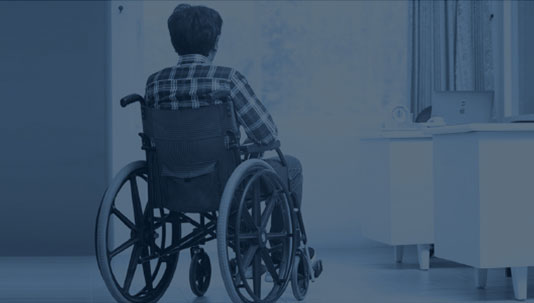
As the pandemic takes its toll on the economy, inclusion in livelihood investments is more critical than ever.It does not have to come at the expense of financial sustainability, as examples from Asia-Pacific show.
Read article

Intentionality in gender investments
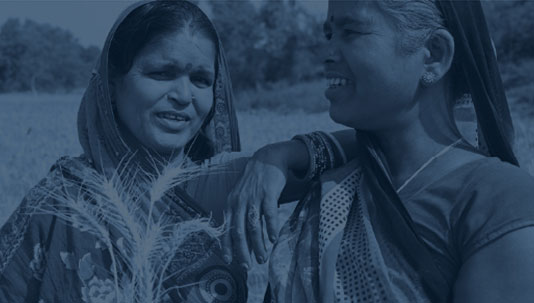
Gender equality calls for investments where benefits for women are not just an unintentional output. Case studies show why Asia-Pacific needs such investments, and how to make the most of them.
Read article