
Intentionality in gender investments
Supported by
Gender inequality in Asia-Pacific
As the world grapples with the socio-economic effects of the covid-19 pandemic, women are facing a widening gender disparity. Women constitute 70% of workers in the health and social sectors. In the first year of the pandemic, food insecurity levels for women became 10% higher than for men1. Further, the employment loss for women stood at 5% in 2020 as compared to 3.9% for men in the same year2. In fact, gender equality was a pressing issue in Asia even before the pandemic. On average, Asia-Pacific has made little or no progress in the ratio of female-to-male labour force participation rate since 2015, and the ratio decreased for Pakistan and China every year in the period from 2015 to 2019. The region is also lagging behind in women’s leadership and political representation. Worldwide, slightly less than four women hold leadership positions for every ten men in business and politics. In Asia-Pacific, this ratio is worse, with only one woman in a leadership position for every four men. Inherent structural inequalities and social norms limit women’s potential to participate and excel in social, economic, and political spheres. These inequalities call for investments to enable gender equality rather than benefits for women merely being an unintentional output of social investments.
Multiple impacts of investments in gender

Economist Impact research highlights the intersectionality principle—that is, investors can have more impact by funding projects that serve multiple purposes. This principle applies well to gender-focused investments.
For example, it is estimated that by accelerating the progress towards gender equality, countries in Asia-Pacific could add US$4.5 trillion to their collective annual GDP by 20253. An example of the intersectionality of the impact is investment in female hygiene products, as these products have both health benefits and positive social outcomes for women. In Sri Lanka, Sinidu is helping tackle period poverty4 by providing low-cost napkins to women as well as creating employment opportunities.5,6 Poor women often use rags, leaves, and paper during periods. Imported napkin brands cost up to 500 LKR (US$1.40) and commercially produced napkins typically sell for between 100 LKR–140 LKR (US$0.20–0.30)7, thereby making them unaffordable for the average Sri Lankan woman8.

Furthermore, Sinidu sourced low-cost napkin machines and biodegradable raw materials, like pine wood pulp, from India to produce biodegradable sanitary napkins, which cost 60 LKR (~20 cents) a packet. In addition, Sinidu employs women for the manufacturing and sale of these napkins. This is also enabling a positive community shift in awareness regarding menstrual health. In low-income countries in which affordability is an issue and menstruation is a taboo subject, enterprises such as these are helping spread awareness regarding menstrual hygiene. Similar outcomes are evident in India, where Sakhi napkins9 and Project Baala10 provide low-cost biodegradable options, thereby making sanitary napkins accessible and affordable for women in rural India. In Pakistan, menstrual hygiene management (MHM) training helps women earn a livelihood while providing affordable and environmentally sustainable menstrual supplies to women in the community11.
Targeting behaviour change for optimal impact
Economist Impact research highlights the behaviour change principle—that is, more comprehensive interventions addressing access, information, and behaviour issues are more effective.
Research reveals that providing women with finance is not sufficient to empower them. This needs to be augmented with technical assistance, mentorship, and a supportive environment in order to ensure that outcomes are sustainable in the long-term to have actual impact.

The education aspect is crucial for financial services and products that target women, especially those from underprivileged communities. It’s important to apply an impact lens to the early stage of product development, otherwise you can open bank accounts for women but may find them dormant in six months. Training for both the sales agents and the female customers is essential. While this will entail a longer lead time, higher upfront investment and more customer support required, the impact is far more positive when you spend the effort to develop the right product for women.
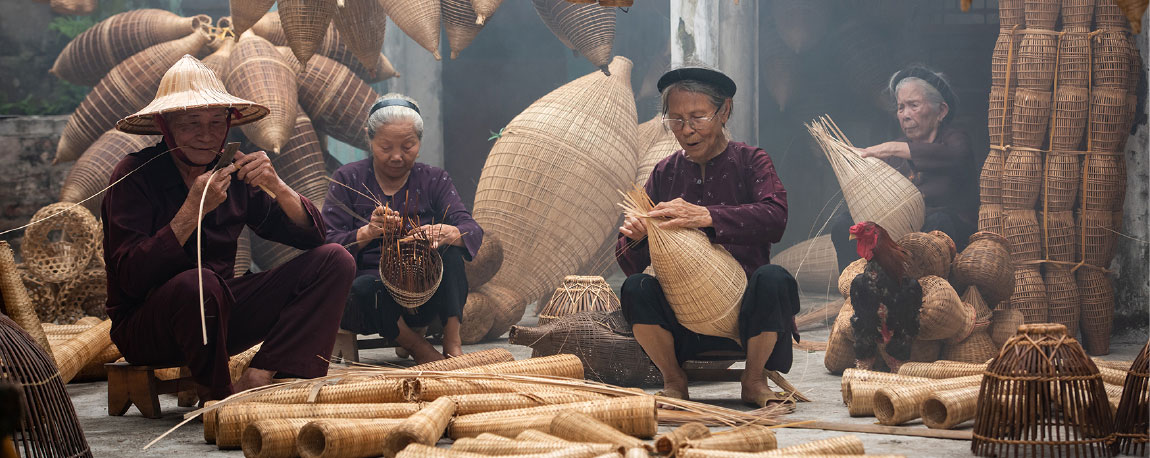
- Liza Green, Credit Suisse Asia-Pacific (APAC) FoundationSuccessful programs in the microfinance sector echo this sentiment. TYM, a microfinance institution in Vietnam12, provides gender and business training to female clients. Since its inception in 1992, training in financial education, business management, and entrepreneurship has helped 120,000 women to successfully escape poverty and 7,000 women to become micro-entrepreneurs. Moreover, participation in this training has led to major improvement in the business skills of these women, as they learned how to manage their existing businesses and adapt to the demands of the local market. Further, when husbands accompanied their wives for these trainings, it positively influenced the women’s position within the household. Their husbands were able to see how they managed their businesses well, which created a more nurturing environment for the women at home13.
Similar results are evident in interventions that integrate the creation of livelihood opportunities and curbing violence against women. The One Community One Family project in Nepal recruited young married women, their husbands, and cohabiting in-laws to participate in a workshop series that combined the following three elements: a) gender transformative norms workshops, b) economic empowerment through the provision of start-up funding of US$150, and c) support through income generating activities (IGAs). In a year, families observed a twofold increase in profits and asset value. The level of food insecurity among women reduced by more than half, and borrowing food or money also reduced substantially. Further, young married women also reported fewer instances of physical violence.
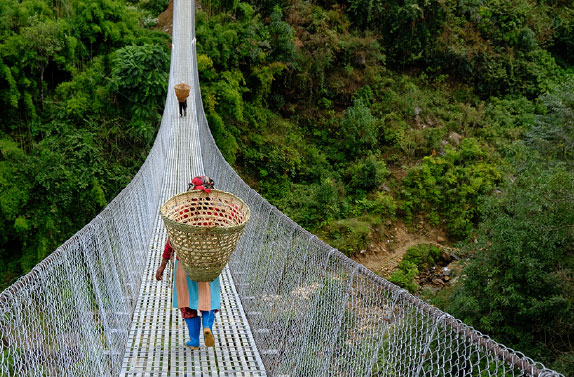
Working with the families, rather than just the women, had wide-ranging results. The workshops set the tone to build better communication and more harmonious and gender-equitable relationships among young married women and their husbands and in-laws. Thus, the impact on behaviour change was phenomenal. In addition, the family’s ideas regarding gender became less patriarchal. Furthermore, women’s perceptions of the relationship between spouses as well as that between a daughter-in-law and mother-in-law also improved14.
What’s next?
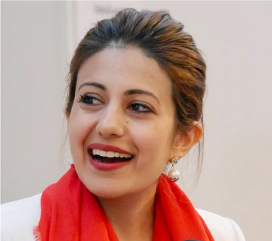
Women are capable of solving challenges ranging from climate action to geopolitical stability. They can be empowered to do so by mobilising more capital towards them.
-Natasha Garcha, Impact Investment Exchange (IIX)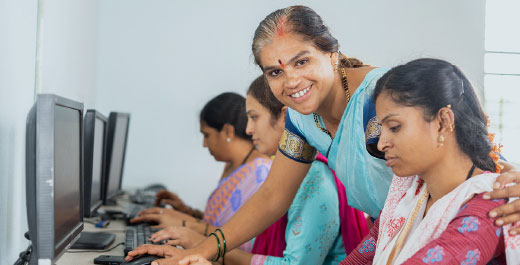
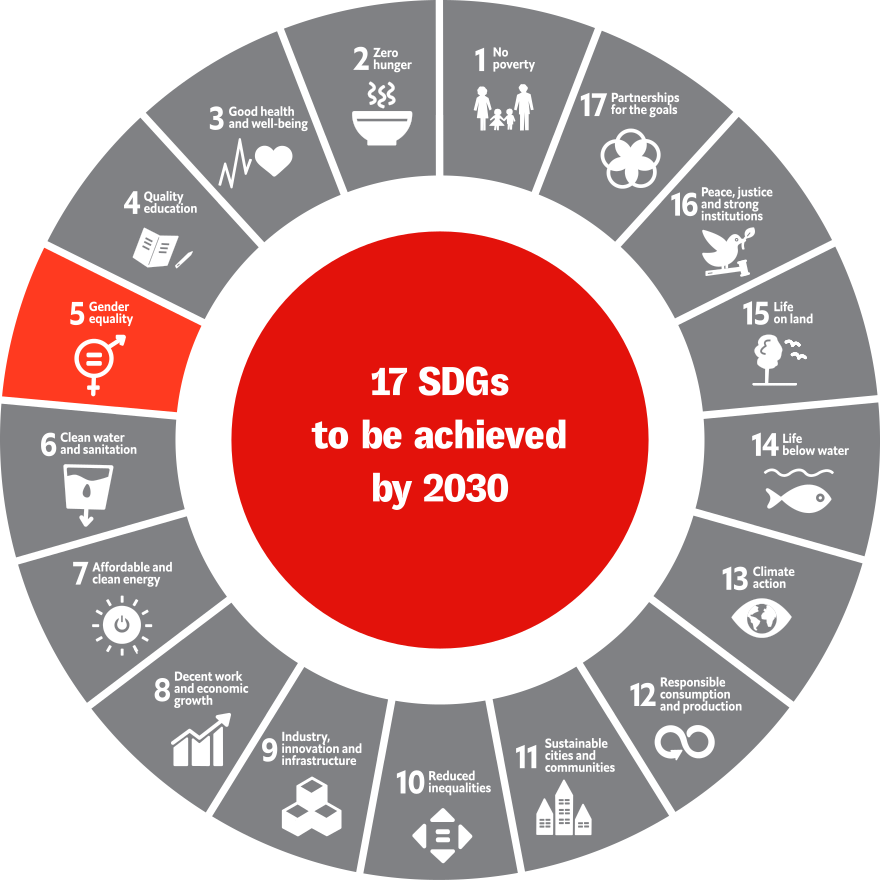
The intersectionality of gender with other sectors implies that while it is difficult to estimate the funding gap for ‘SDG5: Gender Equality’, gender lies at the core of sustainable development. While countries are already taking steps to empower women, it is now crucial to make investments in healthcare, education, and vocational training along with concerted efforts to spur behavioural change in society.
- United Nations (UN) Women.
- International Labour Organisation (ILO) 2021.
- The Power of Parity: Advancing Women’s Equality In Asia Pacific
- Period poverty describes the struggle of numerous low-income girls and women in attempting to afford menstrual products. The term also refers to the increased economic vulnerability women and girls face due the financial burden posed by acquiring menstrual supplies.
- The fight against period poverty in Sri Lanka.
- This women-run initiative wants to eradicate period poverty in Sri Lanka.
- Price per packet, with 10 sanitary napkins per packet.
- Sri Lanka has 4.2 million menstruating women, out of which only 30% use sanitary napkins. The national minimum wage in Sri Lanka is 10,000 LKR. Given that on an average, a woman uses 20 pads per month, they would likely spend 400 LKR (4% of their salary) on sanitary napkins. This makes the pads that are available in the market largely unaffordable for an average Sri Lankan woman.
- ‘Sakhi’ is also a money-spinner.
- Sanitary pads with a difference: How Project Baala is empowering rural women
- Empowering women to practice safe menstruation, UNICEF 2018.
- TYM
- The impact of gender and business training for female microfinance clients in Vietnam.
- A family-centred intervention to prevent violence against women and girls in migrant communities of Baglung District, Nepal, UK Aid 2019.
Other articles

Investing in healthcare: Technology as the key to scalable impact
Asia-Pacific is falling behind on progress in the health SDG. Investing in technology can help countries get back on track by creating scalable impact with commercially viable models.
Read article


Addressing inclusion in livelihood investments
As the pandemic takes its toll on the economy, inclusion in livelihood investments is more critical than ever.It does not have to come at the expense of financial sustainability, as examples from Asia-Pacific show.
Read article


The climate challenge: Need and models of collaboration in the Asian context
Multifaceted problems arising from climate change are affecting Asia-Pacific disproportionately, and they require collaboration to solve. There are multiple pathways to do so.
Read article
