Advancing impact:
A roadmap for social investing in Asia
In 2015, member countries of the United Nations committed to 17 goals, known as the Sustainable Development Goals (SDGs), that are intended as a blueprint for a better future for all. Some progress has been made since then. However, as the covid-19 pandemic continues to disrupt the global economy, achieving the SDGs by 2030 has become more challenging than ever.
Download full report PDF
 Supported by


































17 SDGs to be achieved by 2030

End poverty in all its forms everywhere.

End hunger, achieve food security and improved nutrition and promote sustainable agriculture.

Ensure healthy lives and promote well-being for all at all ages.

Ensure inclusive and equitable quality education and promote lifelong learning opportunities for all.

Achieve gender equality and empower all women and girls.

Ensure availability and sustainable management of water and sanitation for all.

Ensure access to affordable, reliable, sustainable and modern energy for all.

Promote sustained, inclusive and sustainable economic growth, full and productive employment and decent work for all.

Promote sustained, inclusive and sustainable economic growth, full and productive employment and decent work for all.

Reduce inequality within and among countries.

Make cities and human settlements inclusive, safe, resilient and sustainable.

Ensure sustainable consumption and production patterns.

Take urgent action to combat climate change and its impacts.

Conserve and sustainably use the oceans, seas and marine resources for sustainable development.

Protect, restore and promote sustainable use of terrestrial ecosystems, sustainably manage forests, combat desertification, and halt and reverse land degradation and halt biodiversity loss.

Promote peaceful and inclusive societies for sustainable development, provide access to justice for all and build effective, accountable and inclusive institutions at all levels.

Strengthen the means of implementation and revitalize the global partnership for sustainable development.

According to the OECD, the SDGs funding gap, which is the difference between the amount required to achieve the SDGs and the amount currently being invested, has widened to US$4.2 trillion per year.
As actors step in to bridge the funding gap, Economist Impact conducted an extensive literature review and interviews with experts to provide ten key principles of social investment. Mapped across the project life cycle and substantiated with specific examples from the fields of climate, gender, healthcare and livelihoods in APAC countries, these principles can serve as a guide to anyone interested in moving the region towards sustainable development with social investment.
Key sections of the report
 Progress towards SDGs and gaps in Asia-Pacific
 Challenges and funding gaps
 The spectrum of social investment
 Ten principles for social investors
 Executive summary
 Articles
 Videos

Countdown to 2030: Progress towards
SDGs and gaps
in Asia-Pacific
This project focuses on 20 countries in Asia-Pacific, home to over 50% of the world population. These include all countries with available data and a population of at least five million in the Asia-Pacific region, with the exception of North Korea (PRK) and Papua New Guinea (PNG). Namely: Afghanistan (AFG), Australia (AUS), Bangladesh (BGD), Cambodia (KHM), China (CHN), India (IND), Indonesia (IDN), Japan (JPN), Korea (KOR), Laos (LAO), Malaysia (MYS), Myanmar (MMR), Nepal (NPL), New Zealand (NZL), Pakistan (PAK), the Philippines (PHL), Singapore (SGP), Sri Lanka (LKA), Thailand (THA) and Vietnam (VNM). Since the establishment of the SDGs in 2015, these countries have made uneven progress across the SDGs.
Asia-Pacifc average SDG Index scores
 No poverty

 Zero hunger

 Good health and well-being

 Quality education

 Gender equality

 Clean water and sanitation

 Affordable and clean energy

 Decent work and economic growth

 Industry, innovation and infrastructure

 Sustainable cities and communities

 Climate action

 Life on land

 Peace, justice and strong institutions

 Partnerships for the goals
 No poverty
 Zero hunger
 Good health and well-being
 Quality education
 Gender equality
 Clean water and sanitation
 Affordable and clean energy
 Decent work and economic growth
 Industry, innovation and infrastructure
 Sustainable cities and communities
 Climate action
 Life on land
 Peace, justice and strong institutions
 Partnerships for the goals

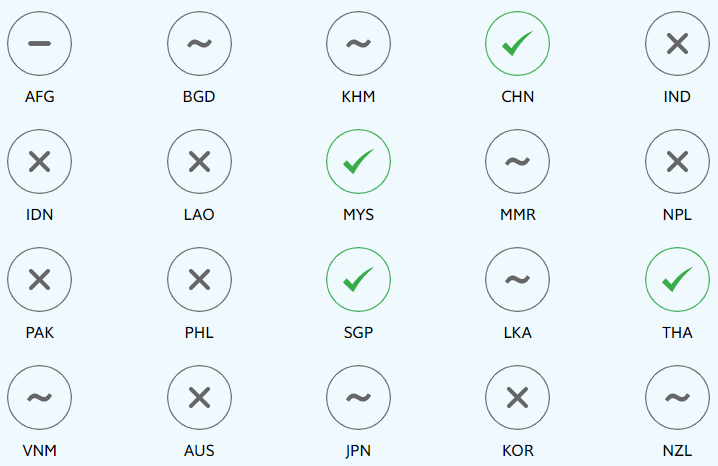
1 No poverty
 Achieved
 Not on track to achieve
 Data not available
 On track to achieve
Overall achievement

Overall 20 country achivement
2 Zero hunger
Achieved
Not on track to achieve
Data not available
On track to achieve
Overall achievement

Overall 20 country achivement
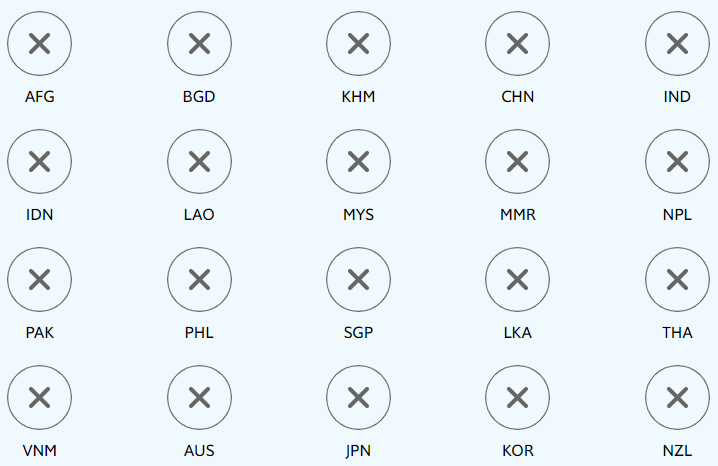
3 Good health and well-being
Achieved
Not on track to achieve
Data not available
On track to achieve
Overall achievement

Overall 20 country achivement
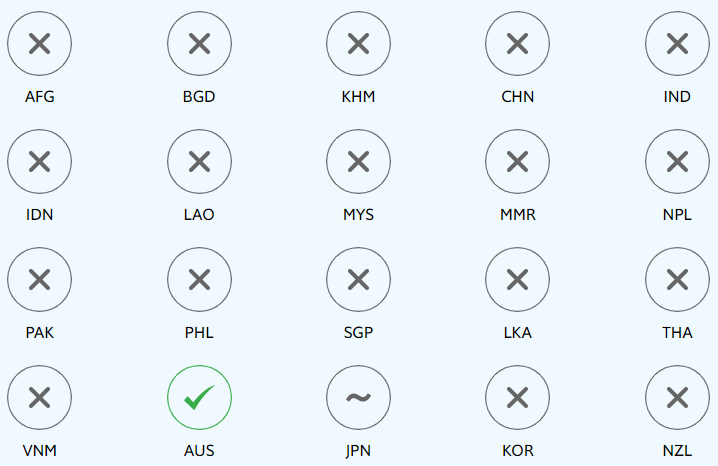
4 Quality education
Achieved
Not on track to achieve
Data not available
On track to achieve
Overall achievement

Overall 20 country achivement
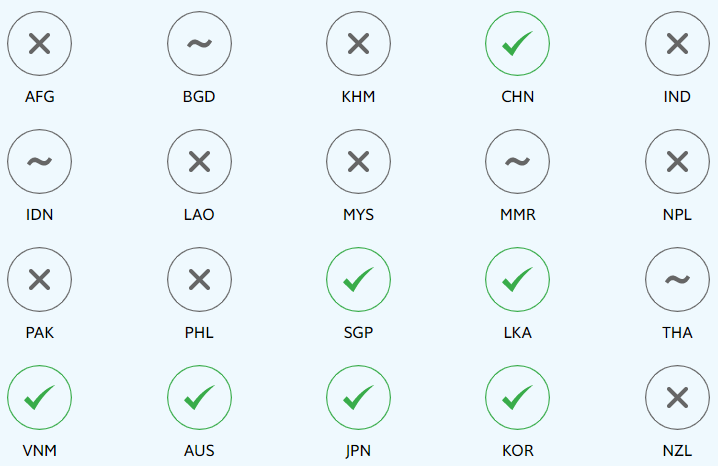
5 Gender equality
Achieved
Not on track to achieve
Data not available
On track to achieve
Overall achievement

Overall 20 country achivement
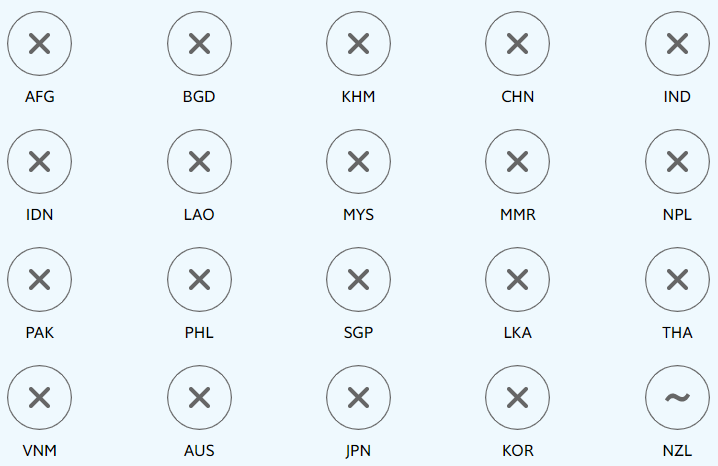
6 Clean water and sanitation
Achieved
Not on track to achieve
Data not available
On track to achieve
Overall achievement

Overall 20 country achivement
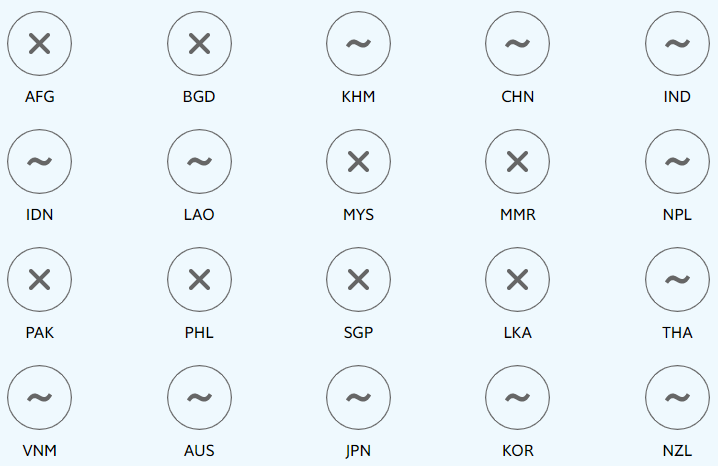
7 Affordable and clean energy
Achieved
Not on track to achieve
Data not available
On track to achieve
Overall achievement

Overall 20 country achivement
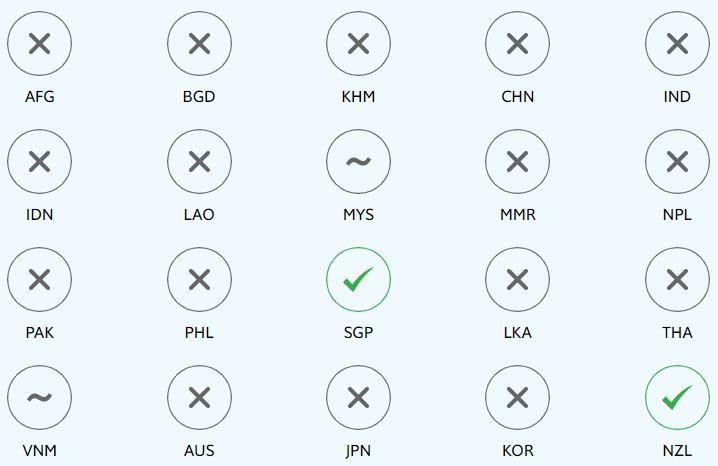
8 Decent work and economic growth
Achieved
Not on track to achieve
Data not available
On track to achieve
Overall achievement

Overall 20 country achivement
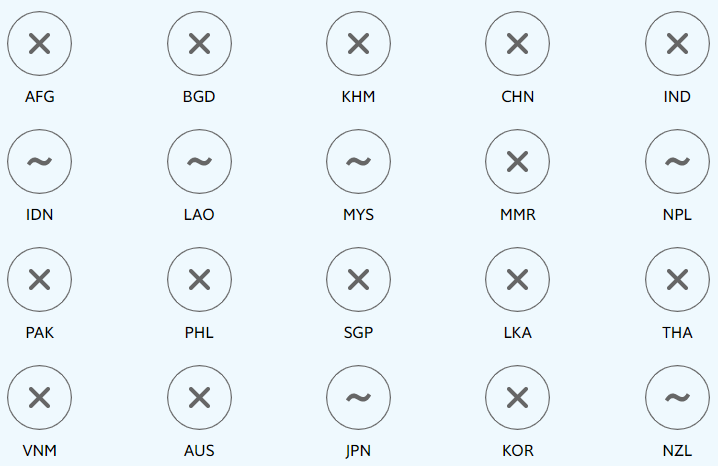
9 Industry, innovation and infrastructure
Achieved
Not on track to achieve
Data not available
On track to achieve
Overall achievement

Overall 20 country achivement
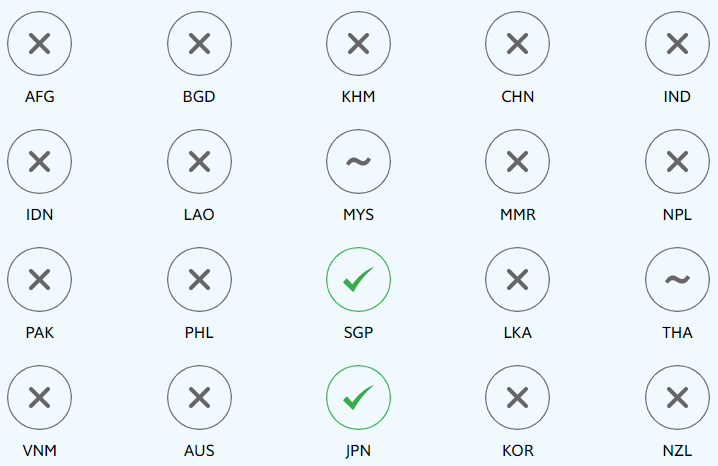
10 Reduced inequalities
Achieved
Not on track to achieve
Data not available
On track to achieve
Overall achievement
Overall 20 country achivement
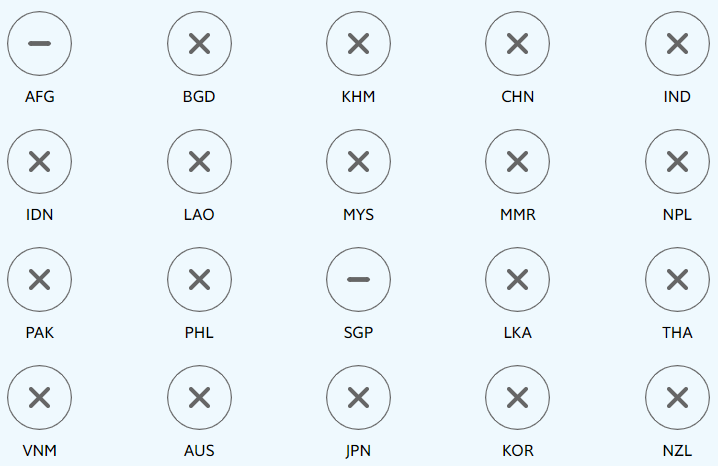
11 Sustainable cities and communities
Achieved
Not on track to achieve
Data not available
On track to achieve
Overall achievement

Overall 20 country achivement
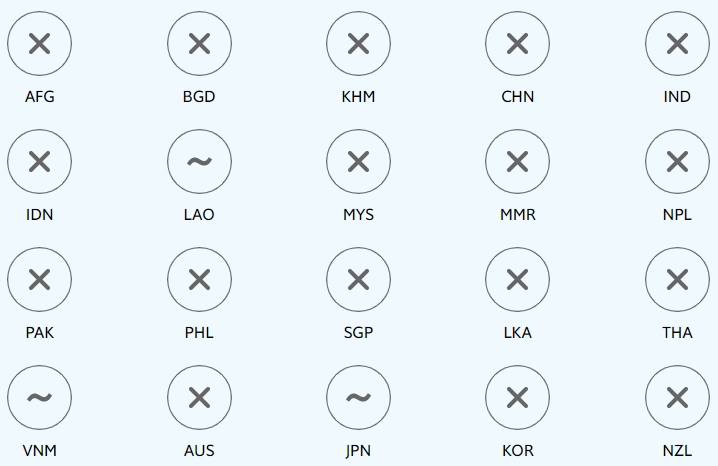
12 Responsible consumption and production
Achieved
Not on track to achieve
Data not available
On track to achieve
Overall achievement
Overall 20 country achivement
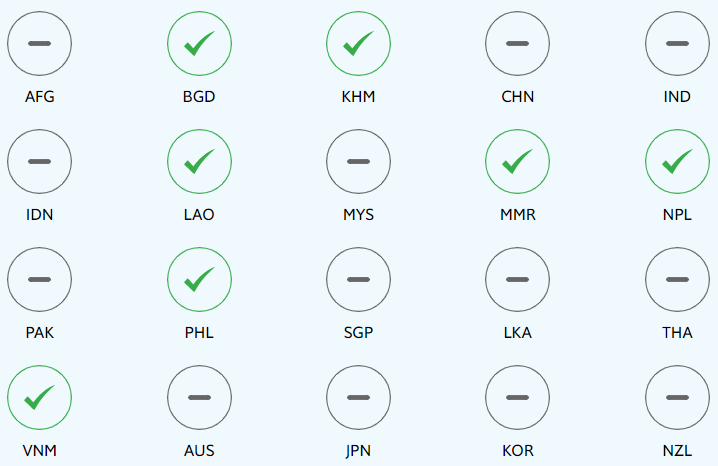
13 Climate action
Achieved
Not on track to achieve
Data not available
On track to achieve
Overall achievement

Overall 20 country achivement
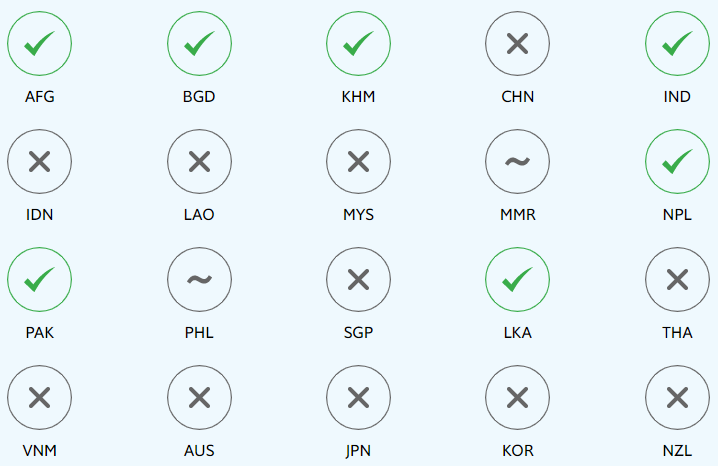
14 Life below water
Achieved
Not on track to achieve
Data not available
On track to achieve
Overall achievement
Overall 20 country achivement
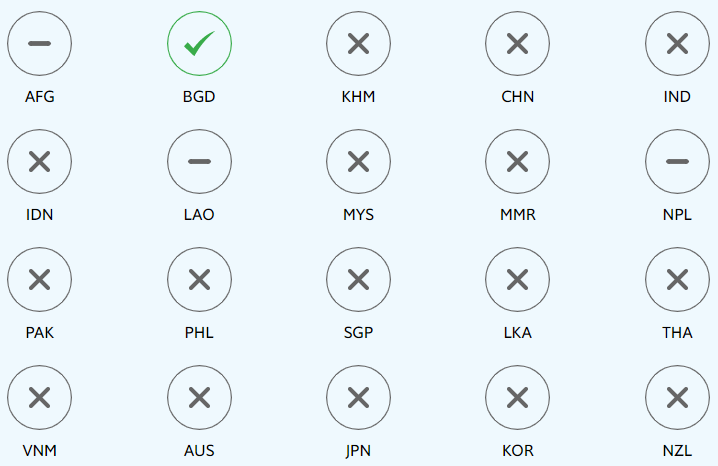
15 Life on land
Achieved
Not on track to achieve
Data not available
On track to achieve
Overall achievement

Overall 20 country achivement
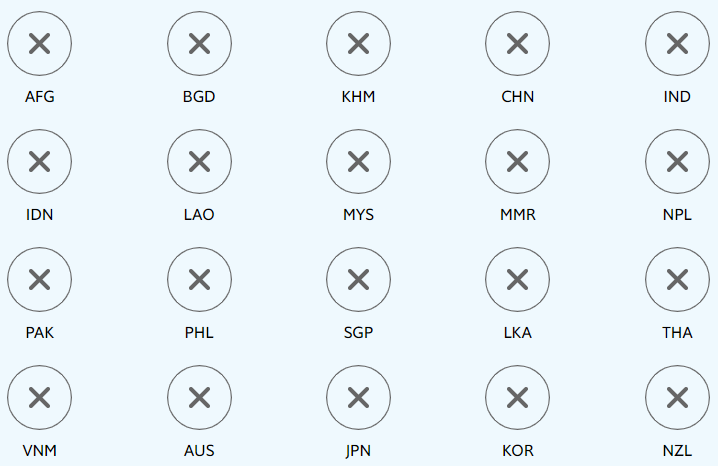
16 Peace, justice and strong institutions
Achieved
Not on track to achieve
Data not available
On track to achieve
Overall achievement

Overall 20 country achivement
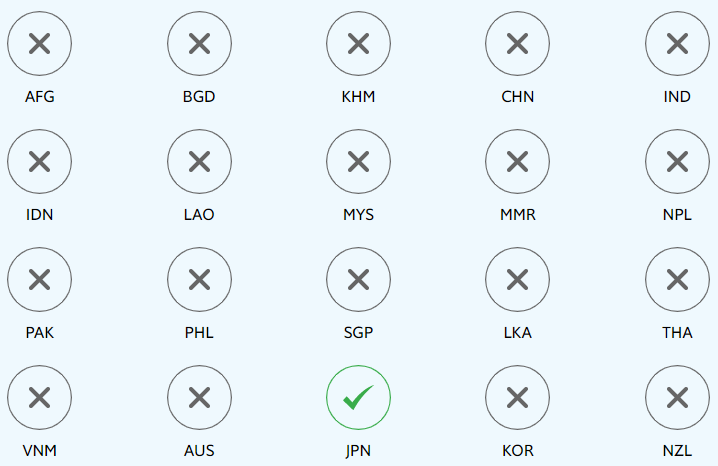
17 Partnerships for the goals
Achieved
Not on track to achieve
Data not available
On track to achieve
Overall achievement

Overall 20 country achivement
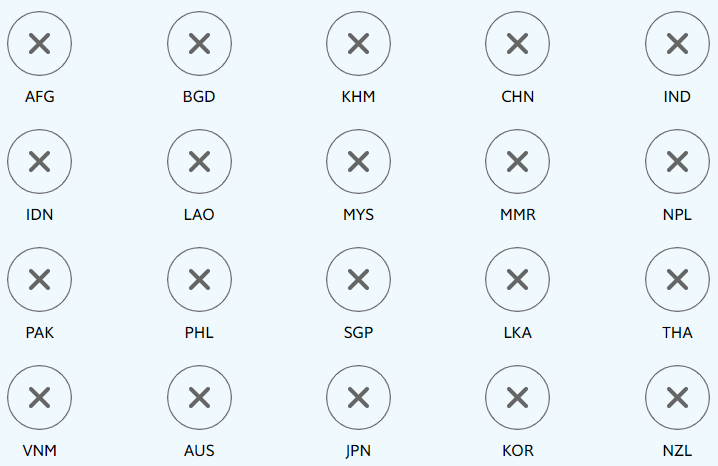
Others
KOR
MMR
THA
VNM
PHL
JPN
BGD
PAK
IDN
IND
CHN
2015 Score
Footnote 1: The chart shows all countries with available data and a population of at least five million in the Asia-Pacific region, with the exception of North Korea (PRK) and Papua New Guinea (PNG). These include: Afghanistan (AFG), Australia (AUS), Bangladesh (BGD), Cambodia (KHM), China (CHN), India (IND), Indonesia (IDN), Japan (JPN), Korea (KOR), Laos (LAO), Malaysia (MYS), Myanmar (MMR), Nepal (NPL), New Zealand (NZL), Pakistan (PAK), the Philippines (PHL), Singapore (SGP), Sri Lanka (LKA), Thailand (THA) and Vietnam (VNM).
Footnote 2: Economist Impact produced this chart using data from the Sustainable Development Report 2021 (SDR 2021) database. The SDRs incorporate new evidence as it becomes available, resulting in a constantly evolving basket of indicators that are not directly comparable from one year to the next. However, the Economist Impact analysis aims to create index scores that are comparable across time, which leaves us with a smaller subset of indicators. As a result, the index scores in this chart are not always the same as in the SDRs.

Challenges and funding gaps: Examples from
climate,
gender, healthcare and livelihoods

Climate
A decrease of 0.37 percentage points in the index score of SDG13: Climate action
...was experienced by the 20 countries in Asia-Pacific from 2015 to 2021
16 of the 20 countries saw an increase in per capita CO₂ emissions
...from fossil fuel combustion and cement production from 2015 to 2019, bringing the average up by 0.1 tonnes per capita
A US$23 trillion investment gap remains in the climate sector
...to achieve the SDGs by 2030 in emerging markets in APAC and beyond, according to International Finance Corporation (IFC)
At least seven of the 20 countries will see no improvement in total CO₂ emissions
...from fuel combustion (tonnes per head) from 2021 to 2030, according to a forecast by the Economist Intelligence Unit (the EIU)
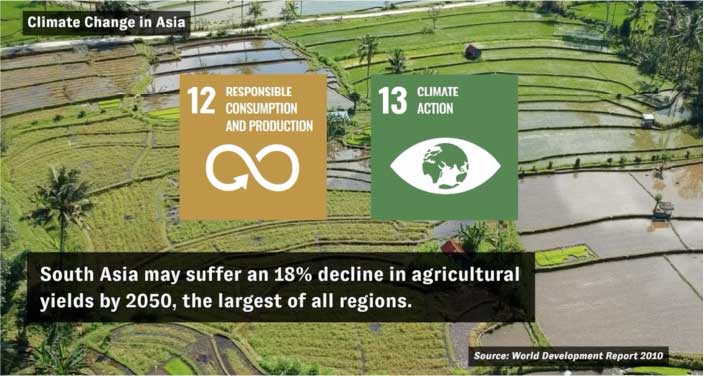
Possible decline of 18% in agricultural yields in South Asia by 2050
...the largest of all regions, as estimated by World Development Report 2010
Asia had its warmest year in recorded history in 2020
...and the summer monsoons were unusually active, according to the World Meteorological Organization
4 to 5 million people forced to move due to disasters
...in China, Bangladesh and India respectively in 2020 alone

Gender
SDG5: Gender Equality is among Asia’s weakest SDGs
...Asia-Pacific scored only 46/100 in SDG5 in 2015, 49/100 in 2021
Girls are catching up in 11 of the 16 non-OECD countries
...in the years of education received from 2015 to 2021
Zero progress made in the ratio of female-to-male labour force participation rate
...in Pakistan and China, for example, this ratio decreased every year from 2015 to 2019 (the year of latest available data)
70% of the 1.3 billion people living in poverty are women
...80% of people displaced by climate change are women
45 million women left the labour force in the first year of the pandemic
Food insecurity levels among women were 10% higher than those among men, according to UN Women
Intersectionality of gender with other sectors puts it at the core of sustainable development

Healthcare
Asia-Pacific made progress of 2.3 percentage points in SDG3: Good health and wellbeing
...from 2015 to 2021, much slower than the 2.5 percentage points per year needed to achieve the goal by 2030
Half of the 20 countries scored below the global average in universal health coverage index
...as reported by the World Health Organisation (WHO) in 2019
Only 15 doctors per 10,000 people in Asia-Pacific
...based on 13 countries data in 2021, according to the EIU. This is lower than the global average (19). In Indonesia, there are fewer than 5
Six Asian countries will have fewer than 20 hospital beds per 10,000 people
...in 2026, according to forecasts by the EIU, while the global average was 30 in 2021
An extra US$371 billion per year is needed to achieve SDG3
...for low- and middle-income countries


Livelihoods
Asia-Pacific suffered a setback in SDG1: No poverty in 2020
...for the first time since 2015
40 million people were pushed into extreme poverty
...defined as living under US$ 1.90 per day, in India, Indonesia, Nepal, Pakistan and the Philippines
Two years’ worth of progress has been lost
...even as most countries have recovered to 2019 levels
Eight countries are now not on track to achieve SDG1 on time
...instead of four in 2019
Unemployment surged in all 16 non-OECD countries in 2020
...progress in SDG8: Decent work and economic growth lost momentum
Unemployment rate will not return to pre-pandemic levels until 2026
...in seven of the 20 countries, according to the EIU
Investments are needed to protect livelihoods
...as the pandemic continues to disrupt economic activities
The spectrum of social investment
“Social investment”, defined in this research as capital that aims to create or amplify social impact alongside potential financial returns, is key to bridging the SDG funding gaps.
Venture philanthropy
Blended finance
Debt
Equity
Equity
Intellectual capital
Introducing the ten principles
for social investors
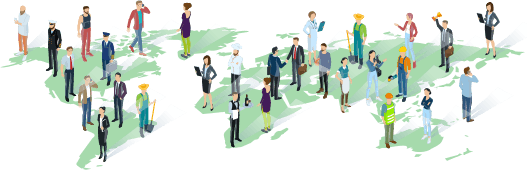
Based on an extensive literature review and in-depth interviews with a range of experts, Economist Impact provides ten key principles for social investors. Mapped across the life cycle of a project, these are broad, high-level principles that work for investments encompassing the various SDGs, with specific examples from areas of healthcare, gender, livelihoods and climate in Asia.
Key principles across the lifecycle of social investment
Mapped across the life cycle of a project, these are broad, high-level principles that work for investments encompassing the various SDGs, with specific examples from areas of healthcare, gender, livelihood, and climate in Asia.






Pre-investment

Collaboration
Collaboration is the best means to achieve systems change that addresses the root causes of problems.

Research
Don’t reinvent the wheel but invest in research where there is no precedent.
Investment planning

Intersectionality
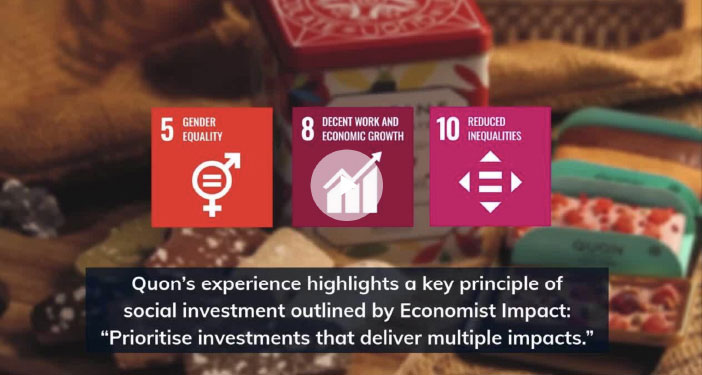
Prioritise investments that deliver multiple impacts.

Knowledge
Provide knowledge as well as financing.

Defining impact
Ensure that projects are well defined, including specifying the desired impact.

Behavioural change
Comprehensive interventions addressing access, information and behaviour issues are more effective.
Implementation

Localisation
Understand the local context during project design and implementation in order to achieve optimal impact.

Trust
Build trust with your implementation partner.
Completion

Measurement & accountability
Measure impact and take responsibility for it, but do not be driven entirely by meeting arbitrary quantitative standards.
Post-completion

Closure
Ensure responsible handovers/project closure.
Advancing impact
Not all countries in Asia-Pacific are on track to achieve the SDGs and large funding gaps exist. Social investment, defined as capital that aims to create or amplify social impact alongside potential financial returns, is key to bridge these gaps. This document provides ten key principles for social investors based on an extensive literature review and in-depth interviews with experts.
Download full report PDF
Articles

Investing in healthcare: Technology as the key to scalable impact
Asia-Pacific is falling behind on progress in the health SDG. Investing in technology can help countries get back on track by creating scalable impact with commercially viable models.
Read article

The climate challenge: Need and models of collaboration in the Asian context
Multifaceted problems arising from climate change are affecting Asia-Pacific disproportionately, and they require collaboration to solve. There are multiple pathways to do so.
Read article


Addressing inclusion in livelihood investments
As the pandemic takes its toll on the economy, inclusion in livelihood investments is more critical than ever.It does not have to come at the expense of financial sustainability, as examples from Asia-Pacific show.
Read article

Intentionality in gender investments
Gender equality calls for investments where benefits for women are not just an unintentional output. Case studies show why Asia-Pacific needs such investments, and how to make the most of them.
Read article
Videos